Stats
Actions
Available In
Tags

Accelerate development with reusable agent skills: implement specs, delegate sub-tasks to sub-agents (Claude, Codex CLI), refactor code, write docs, review diffs, run visual screenshot testing, and orchestrate multi-pass closeouts — all through structured prompts that Claude can invoke on demand.
Eval and improve a skill against golden cases — run the target skill blind in a fresh, context-free subagent on each example input, grade the artifact against the expected outcome, and let the gaps drive the edits. Use when the user wants to test/eval/improve/harden a skill, says "this skill keeps producing X / keeps missing Y", or hands a skill plus example input→expected-output pairs. Pairs with [write-skills](../write-skills/SKILL.md) (the authoring principles every fix obeys).
Create or revise agent skills. Use when adding a new skill file, renaming a skill, simplifying an existing skill, improving trigger descriptions, or deciding what belongs in a skill versus references, scripts, assets, or ordinary docs.
Use Claude Code as an independent `claude -p` subagent when the user explicitly asks for Claude, wants a second-agent opinion from Claude, or asks to delegate a well-scoped task to Claude. Supports selecting `--model` and thinking/effort level with defaults of `opus` and `high`.
When a spec under specs/<feature>/ is done shipping (a write-spec build, or any planned task that produced a spec), archive it to specs/done/ and rewrite it from a build-plan into a durable rationale — the why, the principles, the invariants — pointing back to the real code for the how. Use when implementation has landed and the plan no longer matches what shipped, or the user says a feature/spec is finished. Pairs with [write-spec](../write-spec/SKILL.md) (the plan this closes).
Review changed code for naming, stale references, unnecessary complexity, and comment quality. Use after completing implementation work, before committing, or when the user asks to review or audit code.
Own this plugin?
Verify ownership to unlock analytics, metadata editing, and a verified badge. GitHub access is read-only (username + org membership).
Sign in to claimOwn this plugin?
Verify ownership to unlock analytics, metadata editing, and a verified badge. GitHub access is read-only (username + org membership).
Sign in to claimBased on adoption, maintenance, documentation, and repository signals. Not a security audit or endorsement.
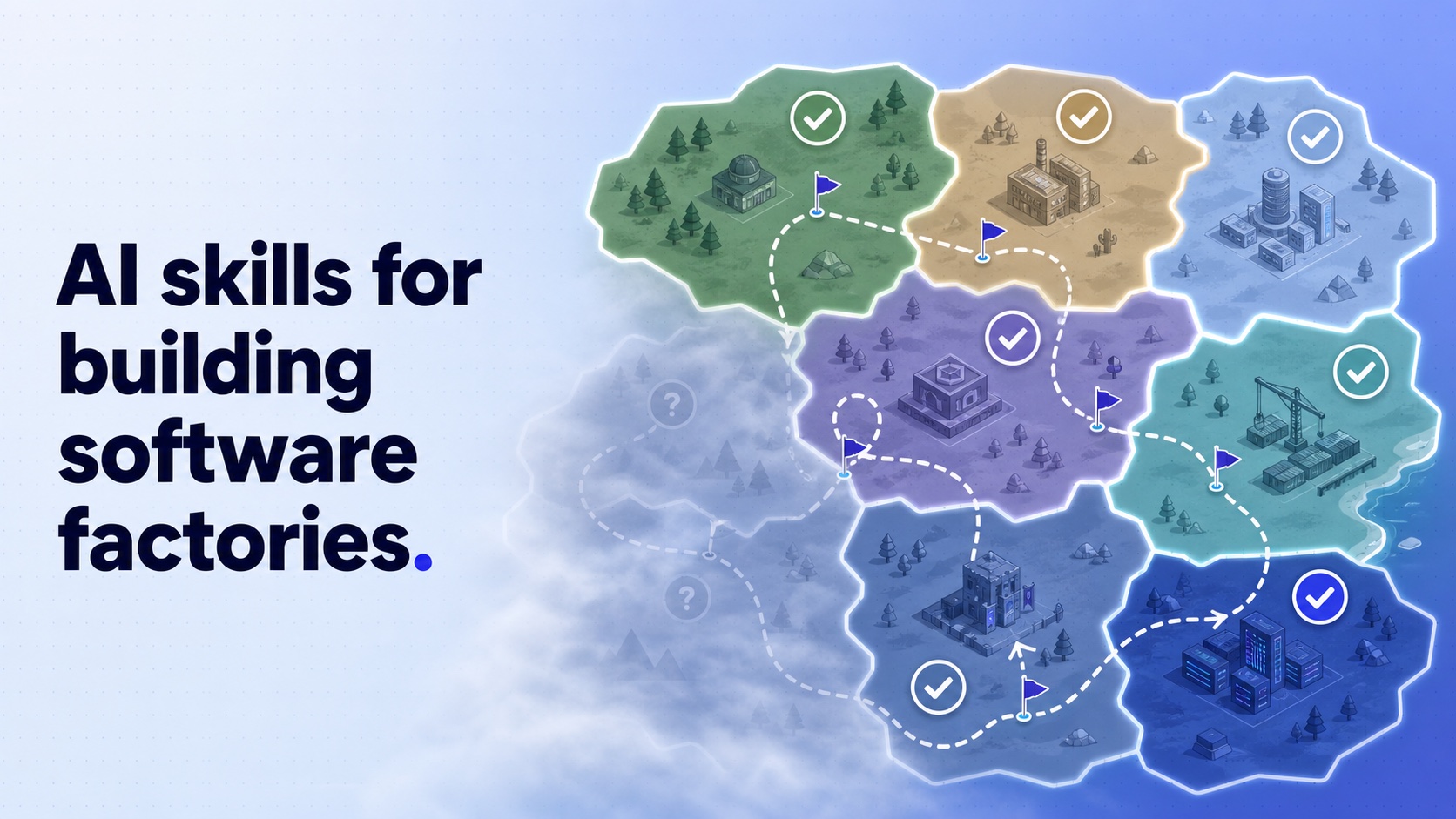
AI skills for building software factories. My personal library of domain-agnostic agent skills, reused across every project. Small, composable, and hackable — works with any harness that supports skills: Claude Code, Codex, opencode, Cursor, duet, and 70+ others.
npx skills add dzhng/skills
Add --list to pick individual skills, or copy any skills/<category>/<name>/
folder into your harness's skills directory (e.g. .claude/skills/).
Software is moving from tasks to factories: agents that pursue a goal autonomously until the output can be trusted. The hard part isn't breaking the goal into tasks — it's breaking it into independently verifiable pieces, and knowing where the pieces even are.
These skills run that loop. Treat the unknown as fog of war: map the terrain, carve it into territories that build and verify in isolation, and recursively re-slice whatever hides more map. And re-planning doesn't stop when planning ends — the spec is a living document, updated and re-sliced mid-implementation whenever the work teaches the agent that the plan is stale. Every piece must prove itself — architecture review, code review, and visual review against a baseline — before the loop moves on. Each iteration gets less wrong, until the goal is done.
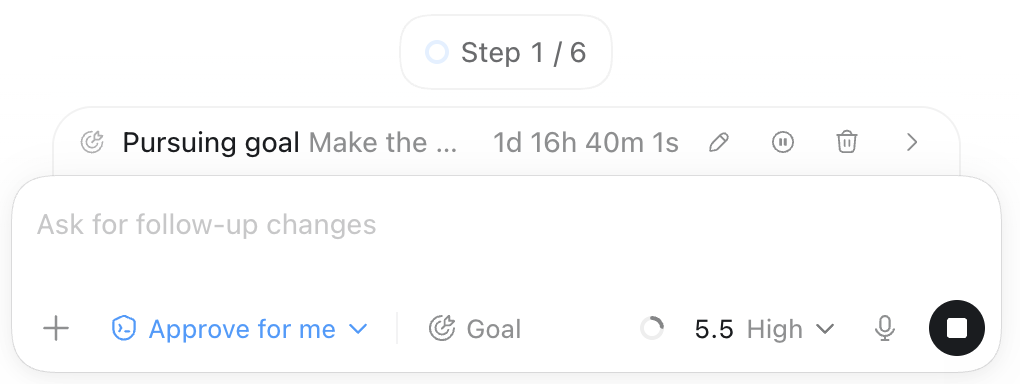
Proof: one unattended Codex run pursuing a single goal for 1d 16h on top of these skills, slicing and iterating until done.
Plan. Ask your agent to /write-spec the goal. It interviews you,
researches the unknowns, and materializes a spec under specs/<feature>/ —
a slice graph where every slice is independently verifiable.
Build. Kick off the loop:
/goal /implement-spec specs/<feature>
Add whatever framing fits: on the xyz branch, or using /codex as the implementer while you stay the parent orchestrator and reviewer.
The rest fires on its own. The spec tells the loop when to call the
other skills — a /review pass at the end of every slice,
/screenshot-critique and /compare-screenshots on anything
visual, /close-spec when the last slice lands — and to update and
re-slice the plan whenever implementation proves it stale. Every skill is
also independently useful: invoke any of them manually whenever you want.
| Skill | What it does |
|---|---|
| explore-unknowns | Walk the user through mapping a task's unknowns quadrant by quadrant — known knowns first, then interviews, reactable artifacts, and blindspot passes — ending with a complete four-quadrant map. |
| write-spec | Break a large feature into independently verifiable, human-reviewable slices with API seams and playable checkpoints. |
| implement-spec | Build an existing spec to completion, one reviewable pass at a time, delegating independent slices in parallel. |
| implement-spec-with-codex | Run implement-spec with Codex writing the code — you orchestrate, integrate, and review every pass. |
| close-spec | Archive a shipped spec and rewrite it from a build plan into a durable rationale record that points back at the code. |
| refactor-clean | Refactor by moving ownership to one clean concept instead of layering compatibility sediment beside the problem. |
| write-tests | Write tests one tracer bullet at a time that pin real behavior — not implementation details, config values, or lucky samples. |
| write-docs | Write docs as a glossary of principles and pointers, never a mirror of the code that will rot. |
| code-review | Audit a diff for stale names, dead references, needless complexity, and comments that narrate instead of explain — ending on a clean/not-clean verdict. |
| review | Closeout a finished change as one pass — refactor-clean, then code-review, then write-docs — sequenced into a single verdict. |
| codex | Use the local Codex CLI as an independent second agent for review and (on explicit ask) delegated implementation. |
| claude | Use Claude Code (claude -p) as an independent second agent for consultation and (on explicit ask) delegated implementation. |
npx claudepluginhub dzhng/skillsProduction-grade engineering skills for AI coding agents — covering the full software development lifecycle from spec to ship.
 az9713
Personal Claude Code / Codex skills — spec-driven development, agent teams, browser automation, productivity, and setup helpers. Install with `npx skills add devstefancho/claude-plugins`.
 devstefancho
Skills-first specification-driven development framework with 7 agent skills for planning, implementation, review, and shipping. Natural language activation with intelligent agent orchestration. Includes /plan, /implement, /research commands plus managing-specifications, implementing-features, and reviewing-and-shipping skills.
 jeanluciano
Claude Code settings and skills for spec-driven development workflows
 feiskyer
4つの専門エージェント(アーキテクト・リサーチャー・ライター・レビュアー)がチームで高品質なスキルを設計・作成する
 sean-sunagaku
No description provided.
 mattpocock
'%20stop-opacity%3D'0.16'%2F%3E%3Cstop%20offset%3D'1'%20stop-color%3D'rgb(200%2C90%2C60)'%20stop-opacity%3D'0.03'%2F%3E%3C%2FlinearGradient%3E%3C%2Fdefs%3E%3Crect%20width%3D'320'%20height%3D'200'%20fill%3D'url(%23g)'%2F%3E%3Ccircle%20cx%3D'250'%20cy%3D'56'%20r%3D'92'%20fill%3D'rgb(200%2C90%2C60)'%20fill-opacity%3D'0.06'%2F%3E%3Ccircle%20cx%3D'64'%20cy%3D'172'%20r%3D'58'%20fill%3D'rgb(200%2C90%2C60)'%20fill-opacity%3D'0.05'%2F%3E%3C%2Fsvg%3E)