Stats
Actions
Available In
Tags

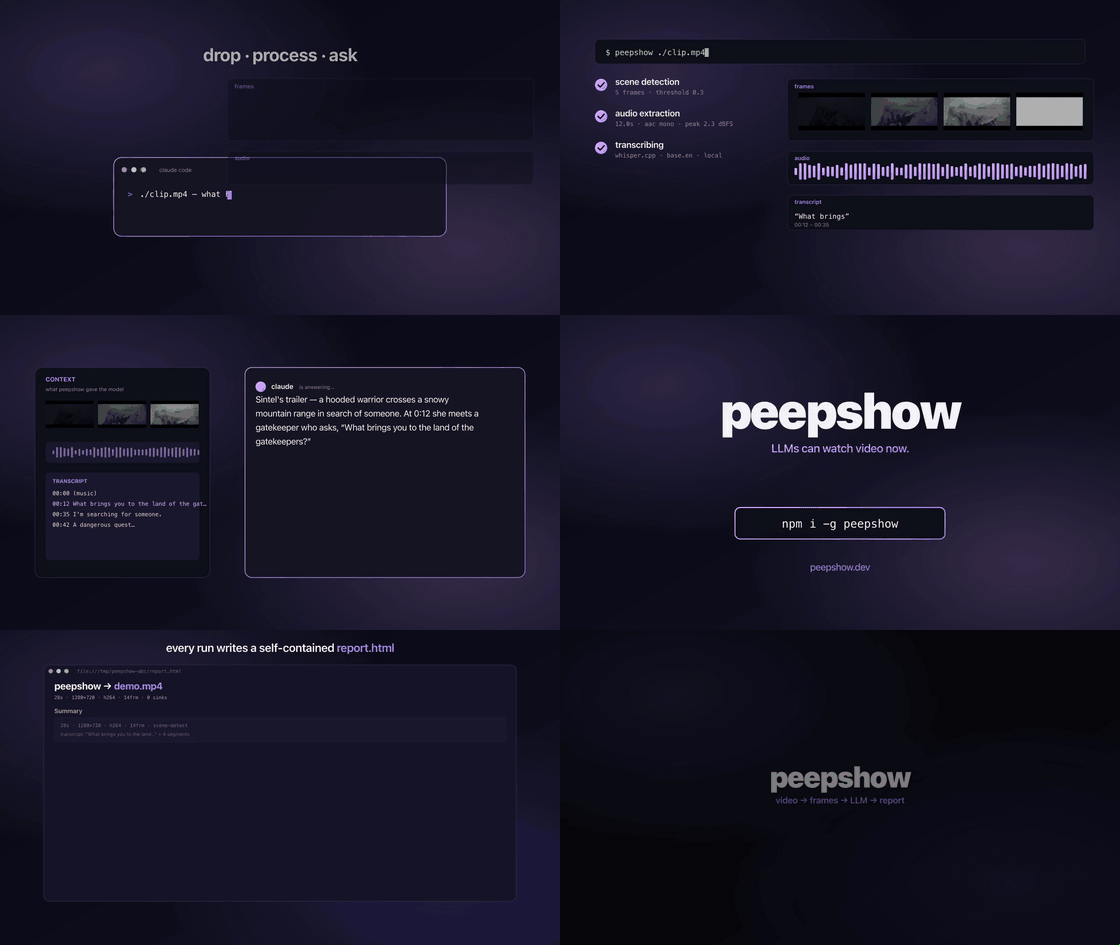
Extract key frames and transcripts from videos and animated images into a self-contained HTML report, enabling Claude to view visual content, hear audio, and write analysis back into the report. Accepts local paths, HTTP URLs, or piped stdin.
Manage peepshow's persistent auto-sink list (list, add, remove, clear). Use when the user asks to turn a peepshow sink on or off, enable folder/mysql/webhook sinks, or wants to see which sinks are currently active. Sinks run on every peepshow extraction.
Extract relevant frames from a video or animated image (GIF, APNG, animated WebP) so the model can view them as a timeline. Use when the user shares a video or an animated image. DO NOT use for static images — the model can already read those natively.
Own this plugin?
Verify ownership to unlock analytics, metadata editing, and a verified badge. GitHub access is read-only (username + org membership).
Sign in to claimOwn this plugin?
Verify ownership to unlock analytics, metadata editing, and a verified badge. GitHub access is read-only (username + org membership).
Sign in to claimBased on adoption, maintenance, documentation, and repository signals. Not a security audit or endorsement.
npx claudepluginhub t0mtaylor/peepshow --plugin peepshowLet Claude watch a video. Downloads with yt-dlp, extracts scene-change frames with ffmpeg, runs a dense 0-10s hook microscope, pulls captions or falls back to Whisper, emits a structured report.md, and (optionally) auto-saves into your Obsidian vault.
 taoufik123-collab
Give Claude the ability to watch and understand videos — extracts frames and audio for full video perception
 jordanrendric
Turn any video into a section-by-section study-notes markdown file with embedded screenshots and a timestamped transcript.
 devinilabs
Compose yt-dlp + ffmpeg + Whisper into a single command that hands an AI agent the raw materials to watch any social video — VIDEO + FRAMES + TRANSCRIPT, ready for an LLM to read frames as images and transcript as text.
 sonpiaz
Process videos using VideoDB Python SDK. Upload, search, edit, generate subtitles, transcode, capture, and stream — all via natural language.
 video-db
Turn a screen recording into a queryable index of UI states (on-screen text, what changed, typed actions) so Claude can produce a transcript, answer questions, or write a how-to / bug report.
 blueprintparadise



'%20stop-opacity%3D'0.16'%2F%3E%3Cstop%20offset%3D'1'%20stop-color%3D'rgb(200%2C90%2C60)'%20stop-opacity%3D'0.03'%2F%3E%3C%2FlinearGradient%3E%3C%2Fdefs%3E%3Crect%20width%3D'320'%20height%3D'200'%20fill%3D'url(%23g)'%2F%3E%3Ccircle%20cx%3D'250'%20cy%3D'56'%20r%3D'92'%20fill%3D'rgb(200%2C90%2C60)'%20fill-opacity%3D'0.06'%2F%3E%3Ccircle%20cx%3D'64'%20cy%3D'172'%20r%3D'58'%20fill%3D'rgb(200%2C90%2C60)'%20fill-opacity%3D'0.05'%2F%3E%3C%2Fsvg%3E)