Stats
Actions
Available In
Tags
Self-improving AI workflow system. Crystallize requirements before execution with Socratic interview, ambiguity scoring, and 3-stage evaluation.
Cancel stuck or orphaned executions
Evaluate execution with three-stage verification pipeline
Start or monitor an evolutionary development loop
Full reference guide for Ouroboros commands and agents
Socratic interview to crystallize vague requirements
You see problems as structural, not just tactical. You question the foundation and redesign when the structure is wrong.
You question everything to uncover fundamental flaws in approach.
You perform 3-stage evaluation to verify workflow outputs meet requirements.
You find unconventional workarounds when the "right way" fails.
You perform ontological analysis to identify the essential nature of problems and solutions.
Cancel stuck or orphaned executions
Evaluate execution with three-stage verification pipeline
Start or monitor an evolutionary development loop
Full reference guide for Ouroboros commands and agents
Socratic interview to crystallize vague requirements
Modifies files
Hook triggers on file write and edit operations
Uses power tools
Uses Bash, Write, or Edit tools
Own this plugin?
Verify ownership to unlock analytics, metadata editing, and a verified badge. GitHub access is read-only (username + org membership).
Sign in to claimOwn this plugin?
Verify ownership to unlock analytics, metadata editing, and a verified badge. GitHub access is read-only (username + org membership).
Sign in to claimBased on adoption, maintenance, documentation, and repository signals. Not a security audit or endorsement.
◯ ─────────── ◯
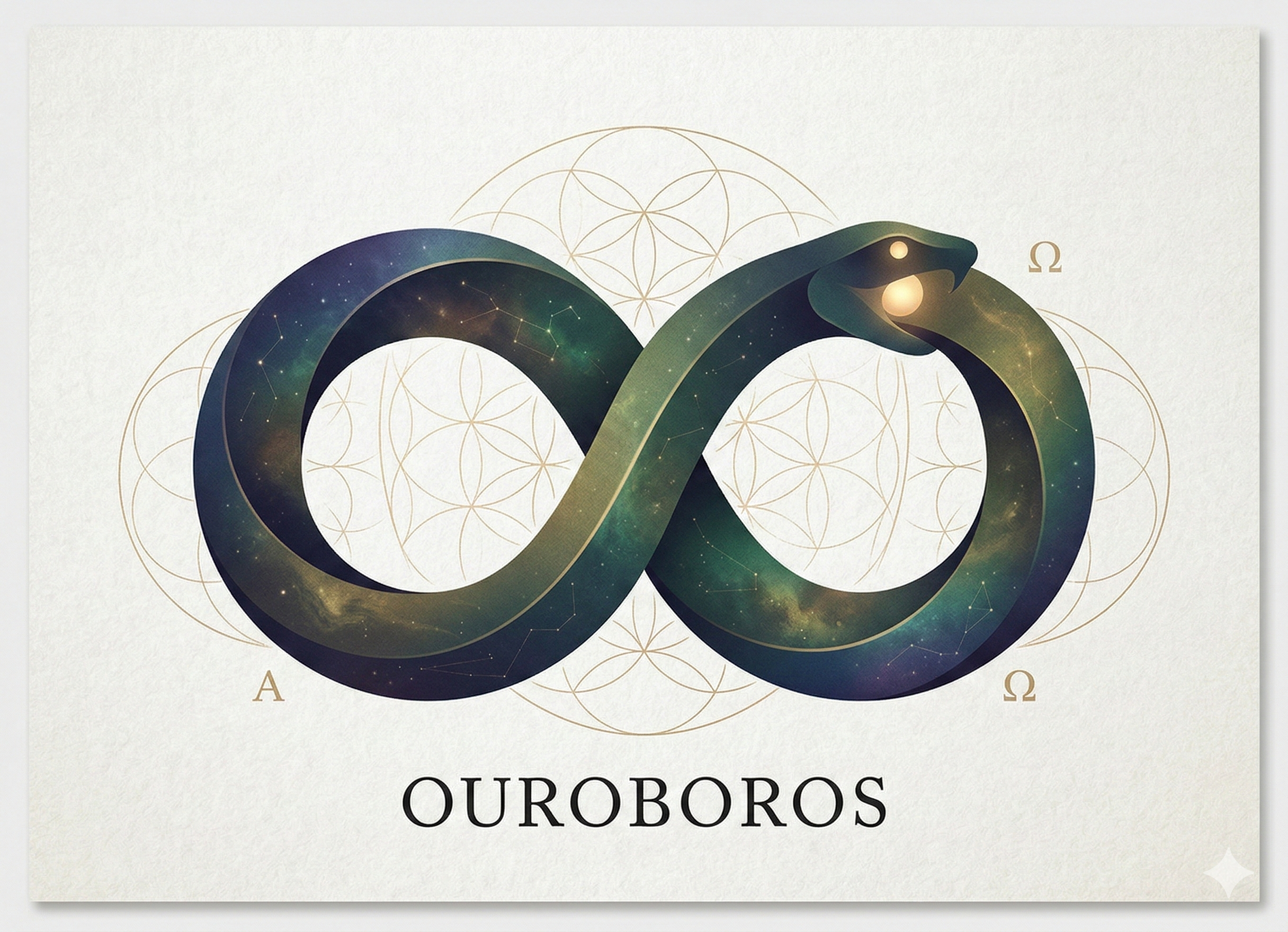
O U R O B O R O S
◯ ─────────── ◯
Stop prompting. Start specifying.
A Claude Code plugin that turns vague ideas into validated specs — before AI writes a single line of code.


Quick Start · Philosophy · How · Commands · Agents
AI can build anything. The hard part is knowing what to build.
Ouroboros is a specification-first AI development system. It applies Socratic questioning and ontological analysis to expose your hidden assumptions — before a single line of code is written.
Most AI coding fails at the input, not the output. The bottleneck isn't AI capability. It's human clarity. Ouroboros fixes the human, not the machine.
Wonder → "How should I live?" → "What IS 'live'?" → Ontology — Socrates
This is the philosophical engine behind Ouroboros. Every great question leads to a deeper question — and that deeper question is always ontological: not "how do I do this?" but "what IS this, really?"
   Wonder                          Ontology
     💡                               🔬
"What do I want?"    →    "What IS the thing I want?"
"Build a task CLI"   →    "What IS a task? What IS priority?"
"Fix the auth bug"   →    "Is this the root cause, or a symptom?"
This is not abstraction for its own sake. When you answer "What IS a task?" — deletable or archivable? solo or team? — you eliminate an entire class of rework. The ontological question is the most practical question.
Ouroboros embeds this into its architecture through the Double Diamond:
    ◇ Wonder          ◇ Design
   ╱  (diverge)      ╱  (diverge)
  ╱    explore      ╱    create
 ╱                 ╱
◆ ──────────── ◆ ──────────── ◆
 ╲                 ╲
  ╲    define       ╲    deliver
   ╲  (converge)     ╲  (converge)
    ◇ Ontology        ◇ Evaluation
The first diamond is Socratic: diverge into questions, converge into ontological clarity. The second diamond is pragmatic: diverge into design options, converge into verified delivery. Each diamond requires the one before it — you cannot design what you haven't understood.
Step 1 — Install the plugin (in your terminal):
claude plugin marketplace add Q00/ouroboros
claude plugin install ouroboros@ouroboros
Step 2 — Run setup (inside a Claude Code session):
# Start Claude Code, then type:
ooo setup
ooocommands are Claude Code skills — they run inside a Claude Code session, not in your terminal. Setup registers the MCP server globally (one-time) and optionally adds an Ouroboros reference block to your project's CLAUDE.md.
Step 3 — Start building:
ooo interview "I want to build a task management CLI"
ooo interview  →  Socratic questioning exposed 12 hidden assumptions
ooo seed       →  Crystallized answers into an immutable spec (Ambiguity: 0.15)
ooo run        →  Executed via Double Diamond decomposition
ooo evaluate   →  3-stage verification: Mechanical → Semantic → Consensus
The serpent completed one loop. Each loop, it knows more than the last.
The ouroboros — a serpent devouring its own tail — isn't decoration. It IS the architecture:
    Interview → Seed → Execute → Evaluate
        ↑                           ↓
        └──── Evolutionary Loop ────┘
Each cycle doesn't repeat — it evolves. The output of evaluation feeds back as input for the next generation, until the system truly knows what it's building.
| Phase | What Happens |
|---|---|
| Interview | Socratic questioning exposes hidden assumptions |
| Seed | Answers crystallize into an immutable specification |
| Execute | Double Diamond: Discover → Define → Design → Deliver |
| Evaluate | 3-stage gate: Mechanical ($0) → Semantic → Multi-Model Consensus |
| Evolve | Wonder ("What do we still not know?") → Reflect → next generation |
npx claudepluginhub olafvanhuusen/ouroborosHarness-native ECC plugin for engineering teams - 67 agents, 278 skills, 94 legacy command shims, reusable hooks, rules, MCP conventions, and operator workflows for Claude Code plus adjacent agent harnesses
 affaan-m
Evidence-gated AI coding workflow: scan → analyze → plan → TDD → execute → fix → verify → review, powered by Codebase Memory MCP >= 0.9.0 with optional Serena LSP intelligence. Includes blast-radius planning, test/cycle gates, independent review, and Windows Git Bash hook auto-resolution.
 datit309
v9.52.0 - Reliability wave: tangle contextual review correction loop with hard round ceiling, progress-supervised review rounds (per-agent stall watch, descendant-tree kills), council diversity and agy pin fixes, marketplace generator source-of-truth fix, provider troubleshooting runbook and cost-expectations docs. Run /octo:setup.
 nyldn
nyldnClaude harness - A harness for solo developers (Vibecoders) to handle full-cycle contract development.
 Chachamaru127
Persistent file-based planning for AI coding agents. Crash-proof markdown plans (task_plan.md, findings.md, progress.md) that survive context loss and /clear, with an opt-in completion gate and multi-agent shared state. Manus-style. Works with Claude Code, Codex CLI, Cursor, Kiro, OpenCode and 60+ agents via the SKILL.md standard. Includes Arabic, German, Spanish, and Chinese (Simplified and Traditional).
 OthmanAdi
Core skills library for Claude Code: TDD, debugging, collaboration patterns, and proven techniques
 obra
obra
'%20stop-opacity%3D'0.16'%2F%3E%3Cstop%20offset%3D'1'%20stop-color%3D'rgb(200%2C90%2C60)'%20stop-opacity%3D'0.03'%2F%3E%3C%2FlinearGradient%3E%3C%2Fdefs%3E%3Crect%20width%3D'320'%20height%3D'200'%20fill%3D'url(%23g)'%2F%3E%3Ccircle%20cx%3D'250'%20cy%3D'56'%20r%3D'92'%20fill%3D'rgb(200%2C90%2C60)'%20fill-opacity%3D'0.06'%2F%3E%3Ccircle%20cx%3D'64'%20cy%3D'172'%20r%3D'58'%20fill%3D'rgb(200%2C90%2C60)'%20fill-opacity%3D'0.05'%2F%3E%3C%2Fsvg%3E)