Stats
Actions
Available In
Tags

Localhost fleet board for Claude Code: every session on the machine visible on one board, cross-session file-conflict whispers, and turn-boundary mail between sessions. Zero wrapper, zero model calls in the core. Tested against Claude Code 2.1.206+ (through 2.1.207).
Executables (bin/) — files in this plugin's bin/directory are added to the Bash tool's PATH while the plugin is enabled.
Matches all tools
Hooks run on every tool call, not just specific ones
Executes bash commands
Hook triggers when Bash tool is used
Own this plugin?
Verify ownership to unlock analytics, metadata editing, and a verified badge. GitHub access is read-only (username + org membership).
Sign in to claimOwn this plugin?
Verify ownership to unlock analytics, metadata editing, and a verified badge. GitHub access is read-only (username + org membership).
Sign in to claimBased on adoption, maintenance, documentation, and repository signals. Not a security audit or endorsement.
Modifies files
Hook triggers on file write and edit operations
Modifies files
Hook triggers on file write and edit operations
Runs pre-commands
Contains inline bash commands via ! syntax
Runs pre-commands
Contains inline bash commands via ! syntax
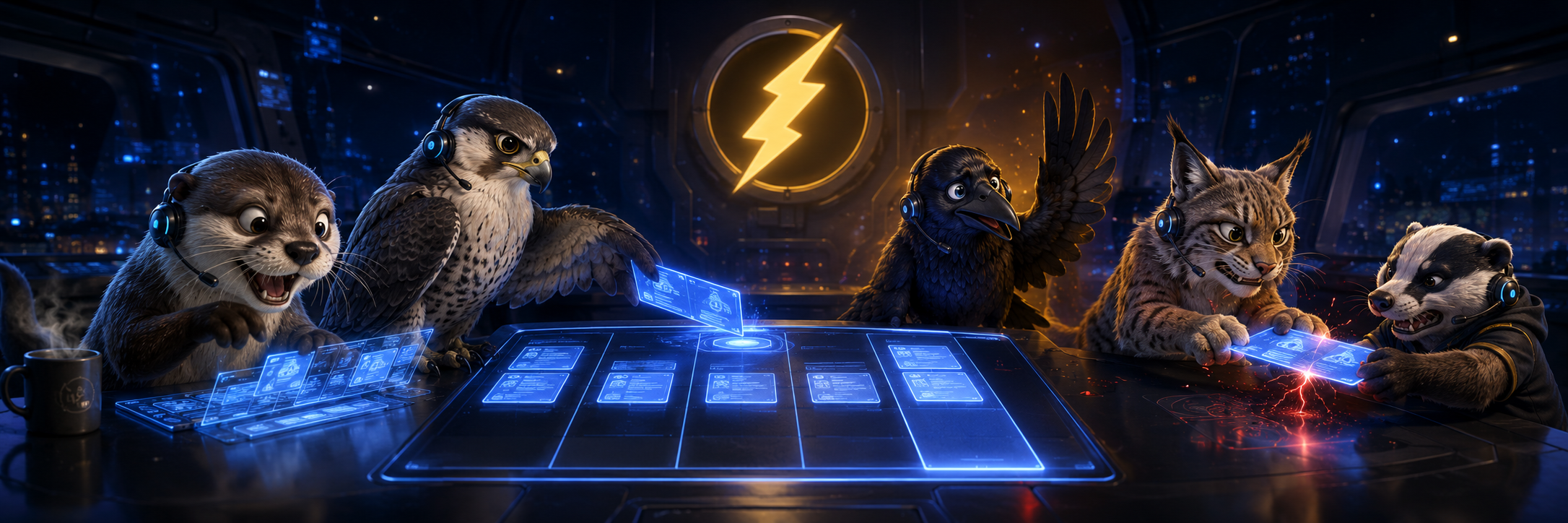


Mission control for every Claude Code session on your machine.
You know how it goes. You start one Claude Code session. Then one in a worktree, because you're organized. Then a third one "just to look something up," and a fourth because the second one seemed stuck. It is now 6 PM, two of them are editing util.js at the same time, one has been silently waiting forty minutes for you to approve rm -rf node_modules, and you honestly could not say which terminal tab is which.
Fleet Deck is the air-traffic control tower for that situation.
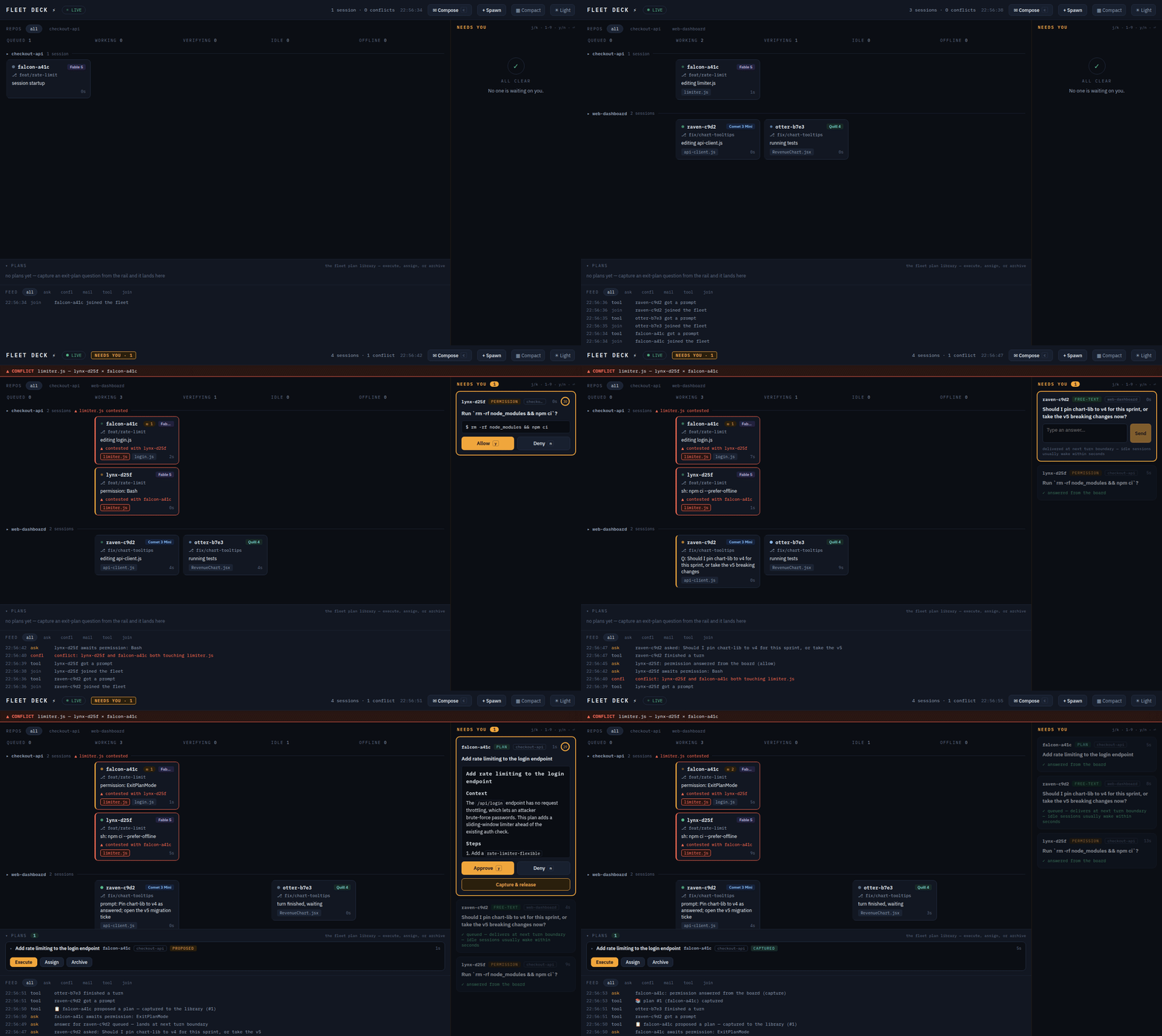
Every session on the machine appears on one local board — http://127.0.0.1:4711 — with a callsign (falcon-a3f2, otter-91c4, or raven-PROJ-123 when it's working a Jira ticket... yes, the banner is literally the roster), a live column derived from what it's actually doing, and a mailbox. Sessions get whispered at when they're about to trample each other's files. Questions land in an amber rail you can answer from across the room. And when you're feeling ambitious, the board will spawn new workers, route tasks to whoever's idle, and file their plans in a library.
queued → working → verifying → needs-you → idle → offline, derived from hook telemetry — never self-reported, because sessions, like people, believe they are almost done. The model badge is derived the same way: Claude Code only reports the model at startup, so Fleet Deck reads it from the session transcript instead and the badge follows a mid-session /model switch rather than freezing on whatever the session happened to launch with.⎿ Allowed by PermissionRequest hook and carries on, slightly smug.assign auto: fix the flaky test picks the best candidate — idle first, least buried, right repo — with a SQL query, not a model call. The core makes zero model calls. Your tokens are yours.+ Spawn button starts a fresh interactive claude in a daemon-owned tmux window. Watch it work on the board, attach to the pane if you're nostalgic for terminals, kill it when it's done (there's a confirm; we've all misclicked).npx claudepluginhub lacion/fleet-deck --plugin fleetdeckInter-session communication for Claude Code — session registry, messaging, and coordination
 desplega-ai
Launch, control, and monitor other Claude Code sessions as workers via tmux
 obra
obraLive TUI dashboard for monitoring all active Claude Code sessions, status, context usage, tokens, and latest messages at a glance.
 DeanLa
Mission Control for Claude Code — auto-starts a web dashboard, provides 90 MCP tools (sessions, stats, live monitoring, projects, teams, insights, coaching, and more), and adds 9 skills including /session-recap, /daily-cost, /standup, /coaching, /insights, and /team-status.
 tombelieber
Let local Claude Code sessions talk to each other in natural language.
 vildanbina
Terminal session manager for AI coding agents supporting Claude, Gemini, OpenCode, and other AI models. Unified TUI for multi-agent development.
 asheshgoplani
'%20stop-opacity%3D'0.16'%2F%3E%3Cstop%20offset%3D'1'%20stop-color%3D'rgb(200%2C90%2C60)'%20stop-opacity%3D'0.03'%2F%3E%3C%2FlinearGradient%3E%3C%2Fdefs%3E%3Crect%20width%3D'320'%20height%3D'200'%20fill%3D'url(%23g)'%2F%3E%3Ccircle%20cx%3D'250'%20cy%3D'56'%20r%3D'92'%20fill%3D'rgb(200%2C90%2C60)'%20fill-opacity%3D'0.06'%2F%3E%3Ccircle%20cx%3D'64'%20cy%3D'172'%20r%3D'58'%20fill%3D'rgb(200%2C90%2C60)'%20fill-opacity%3D'0.05'%2F%3E%3C%2Fsvg%3E)