Stats
Actions
Available In
Tags
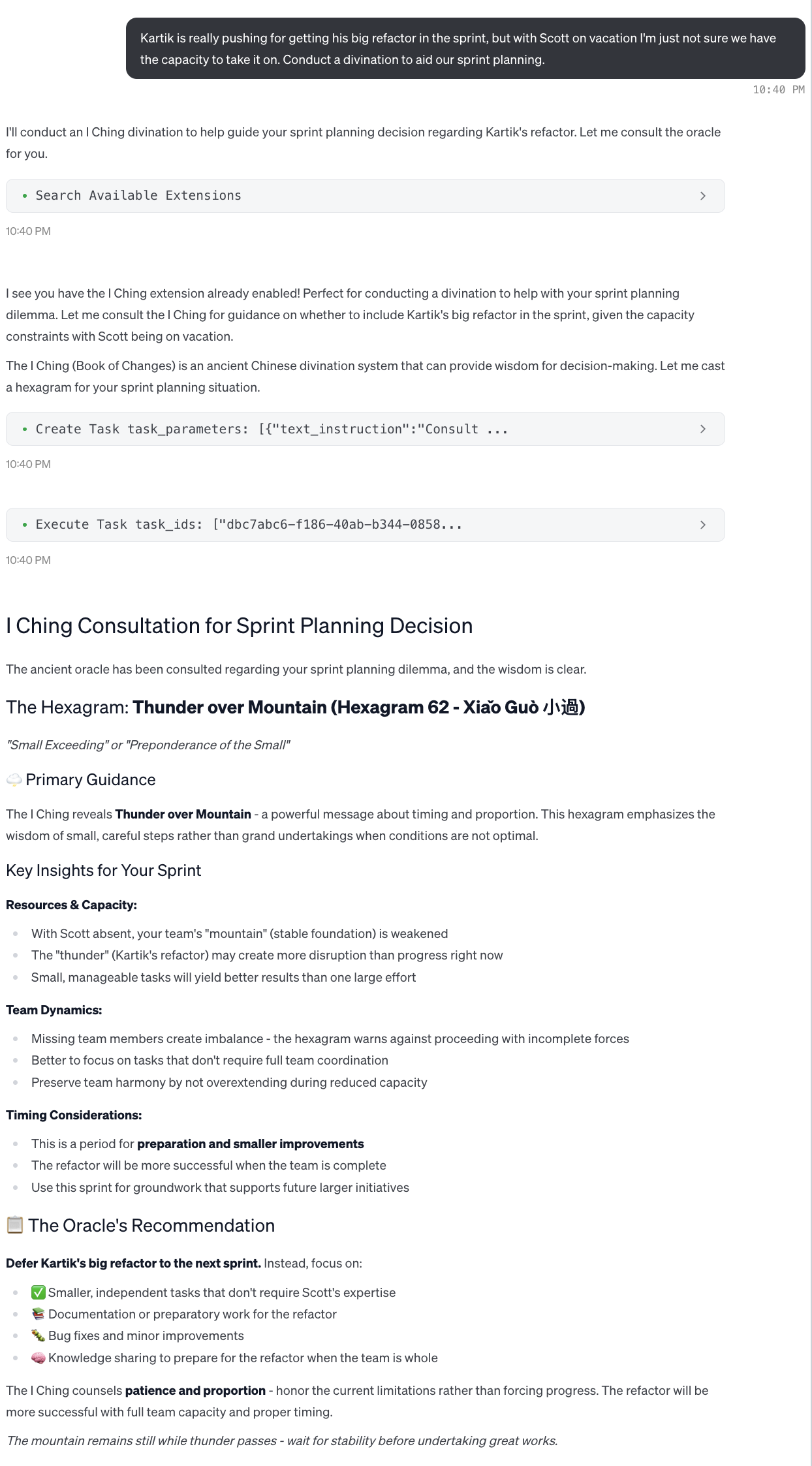
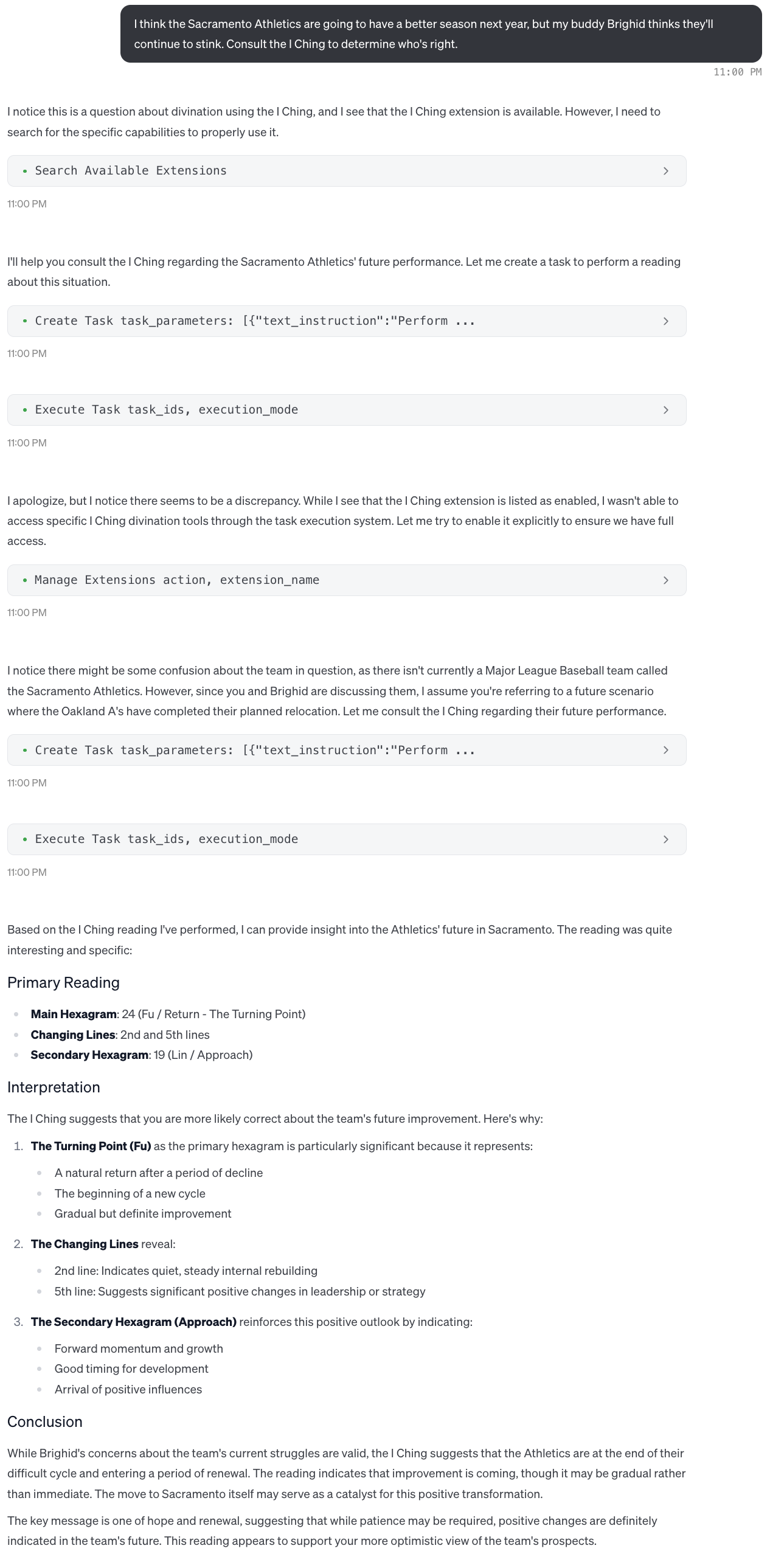
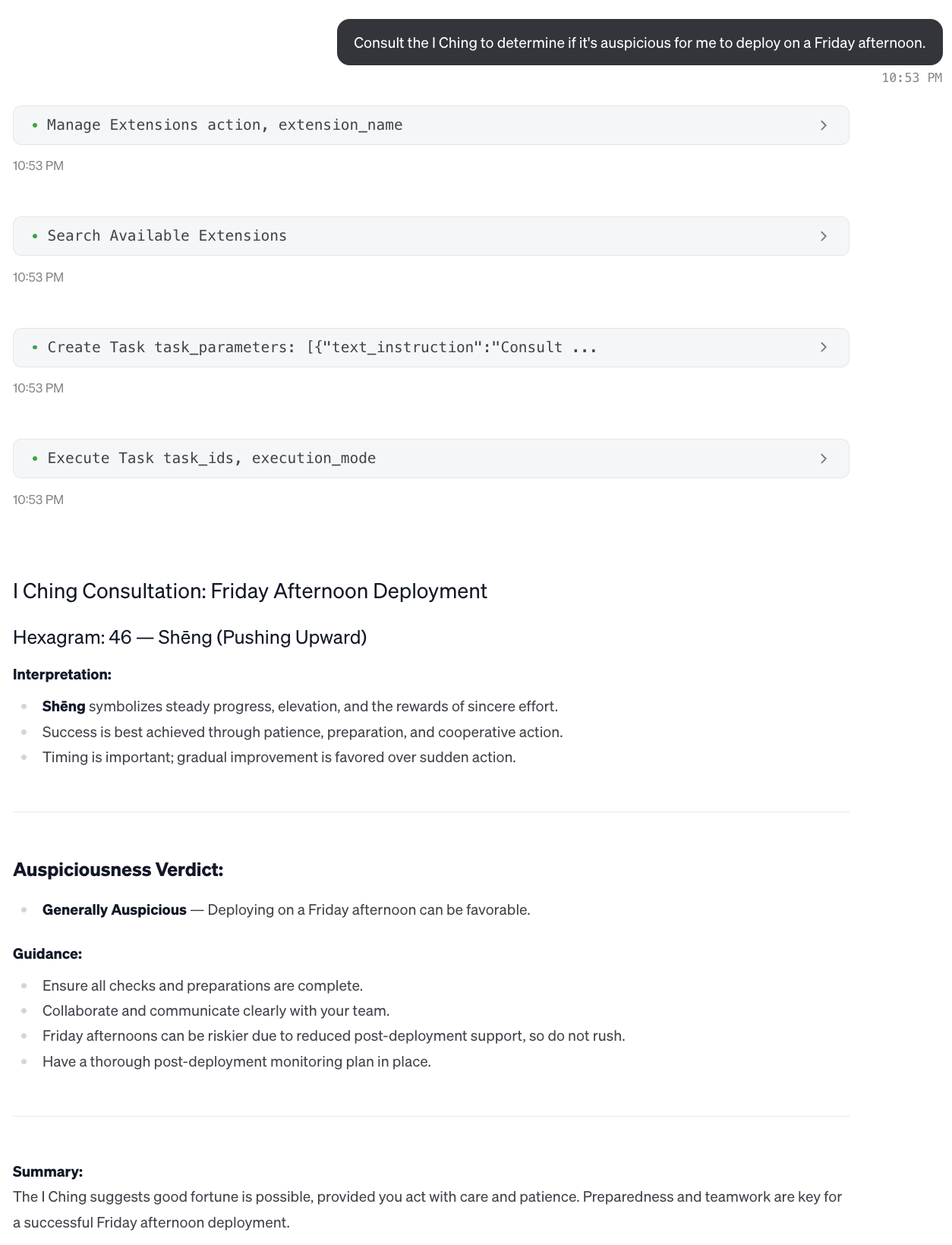
Cast I Ching hexagrams with the traditional three-coin method and receive Wilhelm-Baynes interpretations directly in the terminal
Own this plugin?
Verify ownership to unlock analytics, metadata editing, and a verified badge. GitHub access is read-only (username + org membership).
Sign in to claimOwn this plugin?
Verify ownership to unlock analytics, metadata editing, and a verified badge. GitHub access is read-only (username + org membership).
Sign in to claimBased on adoption, maintenance, documentation, and repository signals. Not a security audit or endorsement.
npx claudepluginhub threemachines/i-chingReal fortune reading for Claude Code. /destiny produces three sections in one shot — today's daily fortune, full life destiny analysis from your 사주, and reasoning footnotes that show what data and 명리 logic backed each conclusion. Powered by lunar-python (real 만세력) + classical 십신/합충 rules + I-Ching 매화역수 시점법. No external APIs.
 xodn348
Clinically informed wisdom companion for navigating the inner life — emotions, meaning, grief, purpose, relationship, identity. Draws on eight wisdom traditions and modern clinical psychology to create conversations that produce real insight and real movement.
 MetcalfSolutions
Force Claude to re-validate when you have doubts (!doubt)
 team-attention
Google Gemini CLI integration for Claude Code. Triggers: 'use gemini', 'ask gemini', 'run gemini', 'gemini cli', 'Google AI', 'Gemini reasoning'. Provides access to Gemini AI models with intelligent model selection, session continuation, and safe defaults.
 Lucklyric
A Claude Code statusline that shows reasoning effort (⚡) and thinking (💡). 5 presets (xsmall-xlarge), Catppuccin theme, no Node/Nerd Font, native PowerShell on Windows.
 AwesomeJun
PI (Wisdom-in-Action) Engine v10 — Name-Reality Alignment & Zero-Question Imperatives. ⚡PI-01~05 pinned mandates, all-imperative directives, scene router, delivery quality gates, token economy. 16 wisdom traditions, MBTI cognitive strategies, anti-pattern decalogue, scene chaining, four dojos. 16+ platforms.
 share-skills
'%20stop-opacity%3D'0.16'%2F%3E%3Cstop%20offset%3D'1'%20stop-color%3D'rgb(200%2C90%2C60)'%20stop-opacity%3D'0.03'%2F%3E%3C%2FlinearGradient%3E%3C%2Fdefs%3E%3Crect%20width%3D'320'%20height%3D'200'%20fill%3D'url(%23g)'%2F%3E%3Ccircle%20cx%3D'250'%20cy%3D'56'%20r%3D'92'%20fill%3D'rgb(200%2C90%2C60)'%20fill-opacity%3D'0.06'%2F%3E%3Ccircle%20cx%3D'64'%20cy%3D'172'%20r%3D'58'%20fill%3D'rgb(200%2C90%2C60)'%20fill-opacity%3D'0.05'%2F%3E%3C%2Fsvg%3E)