Stats
Actions
Available In
Tags

Manages a long-term cognitive substrate for agent-first knowledge work across sessions, using 20 fungal-verb operations for ingestion, digestion, circulation, and homeostasis. Includes automated drift detection, migration drafting, release pipeline orchestration, and a local MCP server with stdio and OAuth 2.1 transports.
Draft a canon schema migration to a new schema_version via the anamorph subagent (named partial upgraders + tests + schema delta + migration guide). Stops before mutating _canon.yaml itself.
Sweep substrate for stale narrative references (version drift, deleted module paths, deprecated identifiers, numeric drift) via the autolysis subagent. Returns a deterministic patch table; does not apply patches.
Run the full Myco release pipeline (pre-flight + bump + commit + push + tag + ci.yml + release.yml + post-release verification) via the stipe subagent. Spores disperse from the cap once the stipe holds it aloft.
Run the v0.6.14+ Cycle-自起 fruit—winnow—molt 闭环 against an existing distilled note. Orchestrates: primordium-autonomous (3-critic fanout) → winnow → hypha (feasibility) → anamorph (if schema) → stipe --branch-only → gh pr create. Owner-merge-gated; no direct main push.
Investigate one or more myco_immune findings via the hypha subagent (root-cause trace + minimal-fix proposal). Read-only; does not apply fixes.
Drafts a canon schema migration: the named partial upgrader functions in core/canon.py, the test fixtures, the canon.schema.json delta, the migration guide entry, and the KNOWN_SCHEMA_VERSIONS update. Use when introducing a new schema_version. Stops before mutating _canon.yaml itself; that is a separate user-approved step.
Sweeps the substrate for stale narrative references (old version numbers, deleted module paths, deprecated identifiers, drift between canon and reality), then proposes a deterministic patch table. Use after a contract bump or major refactor. Read-only by default; produces a fix table the user applies.
Investigates a single myco_immune lint finding by tracing root cause through the codebase, then proposes a minimal fix. Use when immune reports a finding the user wants to understand or close. Read-mostly; no substrate mutation.
Drafts a 3-round craft proposal under docs/primordia/ for a Myco substrate. Use when the user asks for a craft / RFC / proposal / contract-bump justification. Produces the full claim → 1.5 self-rebuttal → 2 refinement → 3 decision shape, then runs myco winnow to gate. v0.6.15+: autonomous mode spawns 5 fungal-named critics (chytrid / rhizomorph / mycoparasite / saprotroph / mycorrhiza) in parallel via Task tool for Round 1.5 fanout, derived from L0 P1-P5 (one critic per principle).
Runs the full Myco release pipeline: pre-flight gate quintet, atomic commit, main push, ci.yml watch, tag creation, release.yml watch (PyPI + MCP Registry + GitHub Release + Cowork .zip bundle), post-release verification. Use when ready to ship a new version. The user supplies the version string; stipe orchestrates everything else. v0.6.14+: gains --branch-only mode for the autopoietic loop (auto-craft PRs to fruiting/<slug>-<date> branch with PR-merge as the sole gate, no direct main push, no PyPI publish until owner merges). v0.7.4+: Cowork artifact extension is `.zip` (not `.plugin`) per Anthropic GitHub issue #40414.
Check Myco substrate health at session boot. Returns the boot brief, active reflexes, and raw-notes backlog. Usually fired automatically by the SessionStart hook; invoke manually when that hook did not run or when substrate state may have drifted.
Work with a Myco cognitive substrate, which is any project directory with `_canon.yaml` and `MYCO.md` at its root. Trigger when the workspace contains `_canon.yaml` (it IS a Myco substrate); the user mentions "substrate", "Myco", or any of the 20 fungal verbs (germinate / hunger / eat / sense / forage / excrete / intake / assimilate / digest / sporulate / traverse / propagate / immune / senesce / fruit / molt / winnow / ramify / graft / brief); a prior tool response's `substrate_pulse` referenced Myco; the user asks about agent memory, long-term context, cross-session state, or agent-first cognitive architecture in the context of a project that has `_canon.yaml`. Myco is NOT a memory tool and NOT a RAG framework, so skip this skill when the user wants vector retrieval, LangChain-style pipelines, or ephemeral chat-scoped memory.
Run the session-end ritual — `myco senesce` composes `assimilate` (promote raw notes to integrated) with `immune --fix` (auto-correct drift). Two modes at v0.5.7+ — full (reflect + immune, PreCompact hook) and quick (reflect only, SessionEnd hook, ~1.5 s kill budget). Skill directory name kept as `session-end` for v0.5.x backward compatibility; the canonical verb is `senesce`.
Uses power tools
Uses Bash, Write, or Edit tools
Own this plugin?
Verify ownership to unlock analytics, metadata editing, and a verified badge. GitHub access is read-only (username + org membership).
Sign in to claimOwn this plugin?
Verify ownership to unlock analytics, metadata editing, and a verified badge. GitHub access is read-only (username + org membership).
Sign in to claimBased on adoption, maintenance, documentation, and repository signals. Not a security audit or endorsement.
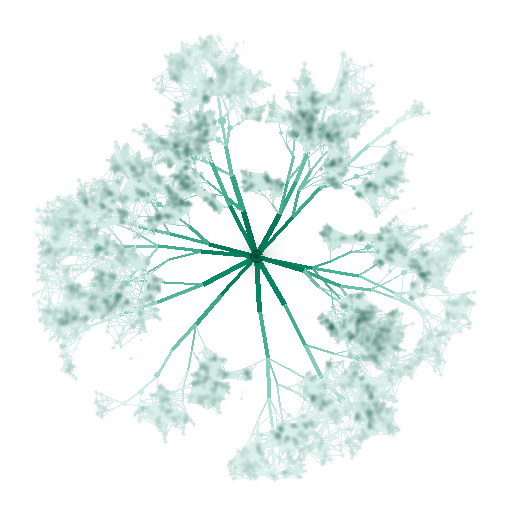
Devour everything. Evolve forever. You just talk.



Claude Code /plugin install myco@myco · Claude Desktop myco-install host cowork · Any MCP host pip install 'myco[mcp]'
What it is · How it lives · Quick start · Verbs · Self-validation
LangChain. LangGraph. CrewAI. DSPy. Claude Code skills. OpenHands. OpenClaw. Every few months the next framework drops and you migrate again.
Your notes rot too. The API you read three weeks back has changed. The doc you wrote last year is wrong now. Your AI does not even remember last week's decisions. Every new conversation starts from zero.
Now imagine one living substrate. It ingests the frameworks, the papers, the APIs, the codebases, the datasets, the decisions, the frictions. It keeps them connected in a graph the agent actually reads. It catches its own drift. It reshapes itself when your work outgrows its old form. For six months. For six years. No migration.
Myco is a living cognitive substrate for your AI agent.
Everything the agent reads or writes, every piece of code and every paper and every decision and every friction, lives on your filesystem as plain markdown + YAML. Files cross-reference each other by name, forming a graph the agent actually reads. The agent eats raw material, digests it into integrated knowledge, immune-checks its own work against drift, propagates learning across your projects, and when the shape of the substrate no longer fits the shape of the work, reshapes the substrate itself. The kernel that runs all of this is itself a substrate, editable by default, maintained by the same agent that uses it.
Not a framework. Not a vector database. Not a managed service. A living filesystem for an agent you talk to.
The idea is older than the implementation. What changed is the agent. Today's models are finally capable of keeping their own tooling alive. Every earlier attempt at a self-maintaining knowledge system died in the same place, where the human in the loop could no longer keep up. Myco puts the loop inside the agent. Every surface, every verb, every rule assumes the maintainer is an agent, so the human in the loop is no longer load-bearing.
You speak. The agent listens. Between your turns, Myco runs a metabolism.
npx claudepluginhub battam1111/myco --plugin mycoStateful agent tools for Claude Code. Learns who you are, remembers what you're working on, schedules tasks, maintains itself.
 ascorbic
Personal AI Infrastructure — persistent memory, session continuity, and knowledge graph for Claude Code
 mnott
mnottUniversal memory runtime — cross-session cognitive memory for Claude Code. Remembers decisions, patterns, and context across coding sessions.
 major7apps
Persistent agent memory that survives across sessions — auto-compacting 3-tier memory with hybrid search. Your agent remembers what it learned, decided, and built.
 kevin-hs-sohn
Knowledge base with semantic search, document storage, and automatic summarization. Perfect for domain-specific knowledge management.
 jeremylongshore
Persistent memory for Claude Code — memories survive across sessions, projects, and machines
 ourmem